Saturday, December 24, 2011

Joseph & Believing


Matthew 1
Joseph was engaged to Mary. She gets pregnant. By the Holy Spirit, according to Mary. Not likely, according to Joseph, and everyone else.

It's the start of the greatest miracle, son of God, born of a virgin. And from the start it's wrought in skepticism, doubt, and controversy.

Conceived by the Holy Spirit? "Really, I'm still a virgin, Joseph. I did nothing, nothing wrong. No sex with anyone. This is God. Really. Believe me, Joseph. I did nothing. God."

Sorry, Mary. No. Not God, that's too much. It's over. I can't marry you.

Could it be? Could God be?

God could have planned it better, set everything up better. Made the prophesies more clear, ran an ad campaign first, sent a messenger to the town first, before all the damage and controversy was done, to warm everyone, let them know what was coming. But no, not that way.

That's not what happened. Instead every person, after every event, is challenged with the question, "Will you believe something incredible and large is happening?"

It probably starts with Mary. She was the only one with the benefit of a warning. The angel came to her before things happened, when the angel came to warn her. "You will get pregnant, Mary, with the son of God." (Matthew, although, omits this part; the story begins when she is already pregnant, and Joseph takes centre stage.)

Joseph is obviously challenged to keep up. He dismisses Mary's explanation and decides to divorce her, quietly and mercifully. It's impossible, this whole story is impossible. God has to step into this belief void.
No one else, presumably, believes. Elizabeth and Zechariah do, because if their own miracle baby (which also started with unbelief). But likely no one else did.

So small, so insignificant. The coming of the messiah in proportions larger than anyone could dream. But no prophet in the temple to announce it, no seer appeared in the village square. Nothing, it seems, to make it easy for anyone to understand, to believe in what was happening.

But still, a need. They had to believe. Mary had to believe. So did Joseph. The story depends on them believing. In the middle of the chaos and controversy they don't have a choice; the story ends if they don't believe. It doesn't matter that the evidence is scant, that the story is unbelievable.

Their whole village had to - although we find out later most of them did not.

And this, sadly, at least it makes me sad, is the way of God. Quiet and subtle. So understated.
The story is much bigger. Matthew precedes it by 42 generations of genealogy. This is where the whole history of Israel is going. And then everything quiets to a whisper no one can hear.

I guess I'm not atypical in my struggle for faith. Everything is evident for everyone to see. But so quiet, so unobtrusive, so understated.

And this is what God puts in front of all of us. Not a lot. But a need to believe. No excuses. And if you don't, the story ends for you.

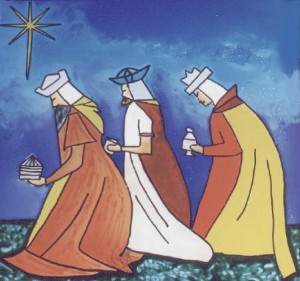
The Three Kings + The Other King


Matthew 2
What was with these wise men? And king Herod?
"Jesus was born in Bethlehem in Judea" is all Matthew says about his birth. It's an incredibly condensed statement, like "Jesus was crucified." That's all it says though.

Quick, understated, simple and evident.

Then comes the drama of the kings: the Magi and Herod. The foreigners, wrought with gifts, come to worship; the local, incensed with insecurity, to kill. 

This baby, whose origin is described in seven words and seven pounds, is clearly more than a baby. Both sets of kings recognized this. So small and ordinary, yet a wonder of nations.

The magi came. The read about his birth in the stars. Perhaps the were learned in international messianic prophesies and knew something about the Jewish king to be born, perhaps some vestiges of the Jewish exile and the hope of a messiah then. The stars aligned to tell them that the time was near, and they came seeking a baby born.

Why they came, why they cared, why they knew, why they bothered is a mystery. They were foreigners, traveled a great distance bearing expensive gifts. Risk, danger, cost, time. For what? This wasn't even their religion, supposedly. Why did they care?
I'm not an astrologer, but I wonder how certain the stars can be. How did they know so certainly that this was happening, certain enough that they traveled for two years to find him?

And then there was Herod. I doubt any expected him to be looking forward to the birth of a messiah. He was half Jew in metaphor, Jewish enough to claim the throne, Roman enough to be appointed, whatever was needed to secure his own power and security. Not one to long for a Jewish hope, not one to long for anything that might threaten him.
Herod's response was anger, hostility, deceit and murder. Faith was no where in his mind. His concern was mere power and he had no reason to believe anything. He was the juxtaposition of faith. Not the lack of faith, but a person whose self made faith impractical, someone whose life focus made faith not impossible, not unnecessary, but an undesired shackle.

There it is: kings with no reason to believe who wandered for two years searching, and a king much closer who saw faith as an absurd obstacle.

Faith isn't possible/impossible. It's present, or incongruent with how you want to live.

Zechariah & Elizabeth


Luke 1
The Bible doesn't shy away from people who have a hard time believing. Look at poor Zechariah.
He's serving in the temple. He's a priest of God, and a well reputed one, if we can assume that from his role in offering the incense. He is actually in the temple when he sees an angel, or a vision of an angel. It seems to be apparent to him too, enough for him to be "shaken and overwhelmed with fear."

The angel tells him to not be afraid, and even be glad; his wife will have their long hoped-for son. Then he continues with a little speech about how important to God's plan this boy would be, this baby of this man of God. 

The story doesn't make Zechariah a faith hero though. He responds with a commonsense question that many of us would ask: "How can this be? For we are too old for children." A simple question. It was a little improbable, and Zechariah was probably in a bit of shock.

Not such a permissable question for the angel Gabriel though. He replies with a "Do you know who you're talking to?" angry line and "it was God who sent me with this news." Zechariah, for his part, is struck dumb until the baby is born.

It's such an unexpected event. He had been in the temple many times before worshipping and serving, but this had never happened before.

I resonate, perhaps unfortunately, with Zechariah. Not unbelief. But "are you sure?" Yes, I believe. But I need to think about it for a minute, I need to doubt a bit, I need to wonder and question, and that's how I believe.

I want to justify my unbelief. Hold on to it and justify it. I think if I let it go I would feel like a fraud, because it's so real to me, good or bad. I've tried to will it away before, tried to be a faith person before, but after a few weeks the facade wears off and I doubt again. To protect myself I allow doubt to be ok, doubt to be good, doubt to be normal. And if I let go of this I would feel depressed and like a loser. It's much easier to say that it's ok, and the faith-people are the aberrations.

Gabriel didn't accept such excuses. "How dare you question this? God can do anything."
Yet Zechariah is included in this story. He could have been edited out, or his unbelief edited out. But it's here, for ask to see.

Zechariah isn't a hero because of this day. He's a hero because of the subsequent days. His nine months of waiting. His giving his son to God, symbolized by his name and his Nazarite vows, but much more in raising this son to be the Prophet, expecting that this would all come true, and raising him so it would be true. It wasn't about Zachariah's response on that day, scolding notwithstanding. Zechariah did believe, much more deeply than we could imagine. It just took a while to get over the shock, to digest it.

Mary & the Angel


Luke 1.26-45
Mary is in an interesting position. The angel comes to tell her that she's going to get pregnant. She asks the logical question of how, since she's a virgin. (It's probably good that she cleared this up, or she might have run off with Joseph to since the problem on her own.) The angel tells her the the baby will be conceived by the holy spirit. And here's the interesting past: Mary is the only one who can know if that's true.

Think about it: word gets out that a local girl is pregnant. You ask the same question as everyone else: Who's the father? She's engaged so Joseph is a good place to start. But he says it wasn't him. And she's telling this crazy story that she didn't sleep with anyone and she's still a virgin. Right, Mary. We all know how that works. Nice try. Who was it? Really, now.

No one else can know. Mary can know. She can be 100% certain. If she wasn't messing around it had to be God. When the angel comes to her she can take the "Ok we'll see, if it happens it happens." No questions for her.

But she must know that no one else will believe her. No one else can. It's impossible. And what's she's about to carry has the consequence of bring outcast, our worst, killed.

Mary's dilemma then is not if it's true or not, but will she survive or not.

There's no easy option for Mary. (There is one that will make it a bit easier: run to her aunt's house and hide there for a while, and hope she will pity her.) Eventually everyone will find out: Joseph (who will leave her), her parents (who will throw her out), and the villagers (who will want to kill her). And then what? What happens then? Yes, she's carrying the son of God. But it will probably get her killed in the process.

"I'm am the Lord's servant. May everything you have said about me come true." It's an incredible statement of acceptance. Not of "I believe it is true," but "I will accept what you will do. Even if it kills me."

The Shepherds


Luke 2.1-20
Here is where the story really unfolds.  Mary and Joseph are forced to go to Bethlehem.  When they get there Mary goes into labour and has the baby. Shepherds in the field see angels who tell them to go and find the child.  Then there's the idyllic manger image where they all gather.

There's that last little line to the shepherds: "You will find the baby wrapped in swaddling clothes and lying in a manger." That says so much.

I guess they were expecting a baby.  That's how people, whether they be common or kings, begin. Someone might even be designated a king at birth, if he was the son of the present king.  Clearly that was not the case here.
He was wrapped in strips of cloth. Rags.  There was no homemade baby blanket to wrap him in; they used whatever rags they could find to keep him warm.  And lying in a feeding trough. Born in a barn. With the sounds and smells of animals, hay and weather and dirt and dark.

This was no birthplace for a king. He was born in poverty to scandalous parents who ran from home and had no place to go. You could say that this was the most ordinary of Jewish births, but it was even poorer than ordinary. It was nothing
No one would look here and surmise that this was a future king.  Joseph might have had David's blood in him, but it certainly didn't show itself. This was no king it would seem. It couldn't be.  Impossible.
Yet it was. This is how it all began.  It started here. Here in a stable, strips of cloth scared parents, and shepherds coming to see.  Later there would be a star and wise men and presents (and then more obscurity in Egypt and then Nazareth), but for now it was nothing but the birth of a king.

Perhaps we shouldn't have been surprised. Long before Jesus said, "Blessed are the meek" and "the first shall be last" God still worked this way. David himself was from the village of Bethlehem, the youngest of his family. When the prophet came and told Jesse to call his boys together so he could anoint one as king he didn't even think to call David. Gideon was upfront with God: "I am the least of my family, which is the least of all the tribes." Moses told God he wasn't capable, a poor speaker who was a refugee and a criminal. God always chose someone out of obscurity.
And now here was the climactic anticlimax. It was God coming to his people. Not just to Jewish people but to everyone. Not as a prophet or angel or avatar, but God in full as a person. All of God, coming.
In the form of a baby of poverty, scandal, obscurity and transience.